Trump’s Tariff Push Signals a New Era for American Industry
On January 20, 2025, President Trump announced 25% tariffs on Mexico and Canada, igniting conservative enthusiasm for protecting American industries. While left-leaning critics cry inflation, supporters see a bold move to bring jobs home and strengthen the economy.
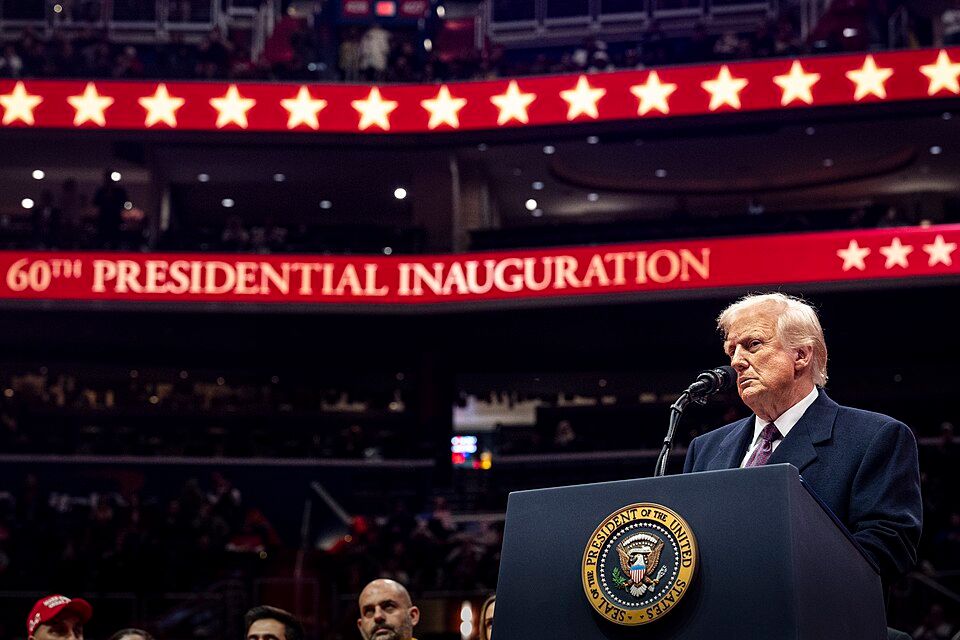
(Reprint) On January 20, 2025, President Donald Trump wasted no time on his first day as the 47th President, announcing a bold proposal for 25% tariffs on imports from Mexico and Canada, a move that has conservatives cheering for its focus on revitalizing American industries. Speaking from the Oval Office, Trump framed the tariffs as a critical step to protect U.S. workers and manufacturers, leveling the playing field against nations he accused of exploiting America’s trade generosity. The announcement, part of a broader executive order mandating a sweeping review of U.S. trade policies, sent a clear message: the era of lopsided trade deals is over. While detractors on the left warn of inflation and trade disruptions, conservatives see this as a long-overdue stand to bring jobs home and strengthen the economy, with businesses already adapting to seize the opportunity.
The tariff proposal targets America’s two largest trading partners, aiming to shield domestic industries like automotive, steel, and agriculture from unfair competition. Trump argued that Canada and Mexico have allowed “massive trade deficits” to hollow out U.S. manufacturing, pointing to the $680 billion in goods exported to these countries in 2023 against a backdrop of job losses. Conservatives rallied behind the plan, with House Ways and Means Chair Jason Smith (R-Mo.) declaring it a “powerful message” to protect American workers from foreign exploitation, particularly Canada’s restrictive dairy markets and Mexico’s barriers to U.S. corn. On platforms like X, supporters echoed this sentiment, with one user writing, “Trump’s tariffs will bring back factories and jobs—America First works!” Businesses, anticipating the February 1 implementation, began front-loading imports to avoid costs, a sign of the market’s quick response to the administration’s proactive stance.
Critics on the left, however, were quick to sound alarms, claiming the tariffs could spark inflation and disrupt supply chains. Rep. Richard Neal (D-Mass.), the top Democrat on House Ways and Means, called the move “reckless,” arguing it would raise costs for families still recovering from recent price spikes. Economists cited by detractors, like those from the Peterson Institute, warned that the tariffs could add $1,200 annually to household expenses by increasing prices for goods like Mexican avocados and Canadian oil. They also fretted about potential retaliation, noting Canada and Mexico’s threats to impose their own tariffs. Conservatives dismissed these concerns as exaggerated, arguing that short-term price adjustments are a small price to pay for long-term economic independence. They pointed to Trump’s first-term tariffs, which some manufacturers credit with saving jobs, as evidence that the strategy can work despite naysayers’ gloom.
The tariff announcement is just one piece of Trump’s broader vision to rebuild America’s economic strength, as outlined in his inauguration address promising an “overhaul of our trade system.” The executive order also called for a new External Revenue Service to streamline tariff collection and a review to identify new trade deals, signaling a comprehensive approach to economic nationalism. Conservatives are optimistic that these measures will reverse decades of manufacturing decline, with 5 million jobs lost since 1997 due to unfair trade practices. While detractors cling to fears of economic disruption, supporters see Trump’s tariffs as a decisive first step toward restoring America’s industrial might, proving that his administration is ready to fight for workers and deliver on its promise of prosperity.
Like this article