Trump's Gaza Peace Proposal: A Pathway to Stability
Even without full Hamas buy-in, the plan envisions proceeding in "terror-free zones" under ISF control, incorporating interfaith dialogues to foster tolerance and economic redevelopment.
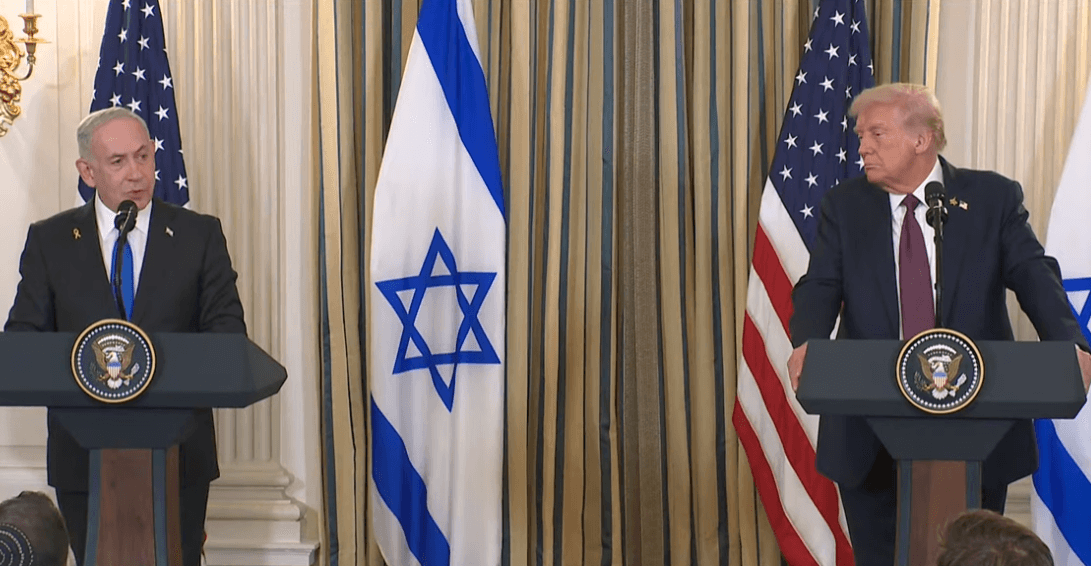
President Donald Trump and Israeli Prime Minister Benjamin Netanyahu unveiled a 20-point peace proposal for Gaza on September 29, outlining immediate cessation of hostilities, hostage exchanges, and demilitarization as steps toward regional stability, with Hamas currently reviewing the terms and sources indicating a lean toward acceptance. Netanyahu emphasized the urgency, stating, "This can be done the easy way or the hard way, but it must be done," during a White House press conference, while Trump described it as a "real chance for greatness in the Middle East."
The proposal requires Hamas to release all hostages within 72 hours of agreement, in exchange for Israel's release of 250 life-sentence prisoners, 1,700 Gazans detained post-October 7, 2023, and proportional remains of deceased individuals. Hamas fighters committing to disarmament would receive amnesty or safe passage out of Gaza, with the group's tunnels and weapons dismantled under independent monitoring and a buyback program for reintegration. Israeli forces would withdraw to pre-agreed lines, suspending operations, while an International Stabilization Force (ISF)—comprising Arab and global partners—deploys to train Palestinian police, secure borders with Israel and Egypt, and block munitions inflows while enabling trade.
Even without full Hamas buy-in, the plan envisions proceeding in "terror-free zones" under ISF control, incorporating interfaith dialogues to foster tolerance and economic redevelopment. The Palestinian Authority, Gaza's administrative body, welcomed the initiative, affirming commitment to reforms like new elections and ending payments to families of attackers, and expressing confidence in Trump's mediation for a "modern, democratic, and non-militarized Palestinian state." Hamas's negotiating team is studying the document, with diplomatic sources anticipating a swift response, potentially positive, though skepticism persists over enforcement and Israel's long-term intentions.
For the region, acceptance could halt 23 months of conflict that displaced 1.9 million Gazans and claimed over 41,000 lives, per Gaza health authorities, enabling reconstruction estimated at $50 billion and a pathway to Palestinian self-determination without Israeli occupation or annexation. It builds on the 2020 Abraham Accords, normalizing Israel-UAE, Bahrain, Sudan, and Morocco ties, which withstood Gaza hostilities and expanded trade to $3 billion annually by 2025, potentially drawing Saudi Arabia and Oman into a broader anti-Iran axis. Rejection risks intensified Israeli operations with U.S. backing, per Trump's warning, prolonging instability amid Iran's proxy threats.
For President Trump's legacy, success would eclipse his first-term Accords as the most transformative Middle East diplomacy since Camp David in 1978, solidifying his image as a peacemaker who garnered respect across divides—evident in bipartisan congressional praise and Palestinian endorsement—while advancing U.S. interests in countering extremism and fostering economic ties. Rep. Tom Tiffany (R-Wis.) highlighted Trump's mutual respect approach: "He was treated with great respect, and he treated them with great respect... That's why it's getting done." Failure could tarnish efforts, but the proposal's Arab backing positions it for partial implementation, underscoring Trump's deal-making amid stalled prior talks.
Like this article