Israeli Strike Wipes Out Iran's Supreme Council Meeting: Succession in Total Chaos
The attack targeted the assembly's building in Qom while members were counting votes for the new supreme leader.
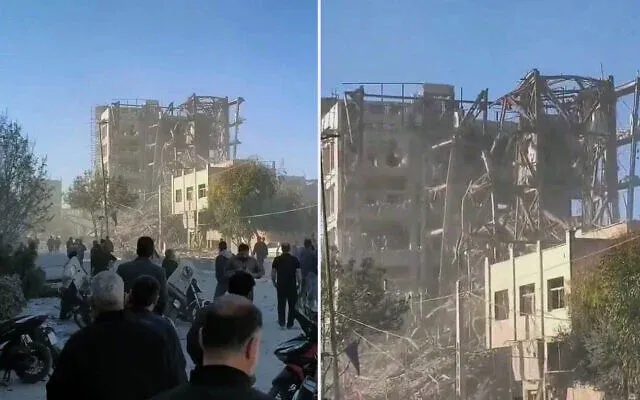
TEHRAN – Israeli forces struck a key meeting of Iran's Assembly of Experts on March 3, 2026, as the clerical body gathered to select a successor to Supreme Leader Ayatollah Ali Khamenei, further complicating the regime's leadership transition amid ongoing U.S.-Israeli military operations.
The attack targeted the assembly's building in Qom while members were counting votes for the new supreme leader. The 88-member Assembly of Experts, responsible for appointing, supervising, and potentially dismissing the supreme leader under Iran's constitution, was convening for this purpose following Khamenei's death in initial strikes on February 28. Iranian media reported the building was "flattened," with multiple casualties among the clerical establishment, though exact figures remain unconfirmed.
A senior Israeli official confirmed to Fox News that "Israel struck while they were counting the votes for the appointment of the supreme leader," highlighting Israeli intelligence capabilities in targeting a vulnerable moment. Fox News Chief Foreign Correspondent Trey Yingst reported from Tel Aviv that the strike hit "what’s left of the leadership" as they met to choose Khamenei's replacement, describing it as a "significant development." Dr. Houman David Hemmati, a Fox News contributor, noted the irony of assembling top officials in one place during active hostilities, stating it could leave Iran without leadership "for a while."
The bombing underscores the conflict's origins: U.S. and Israeli airstrikes on February 28 targeted a high-level IRGC meeting in Tehran, killing Khamenei, the defense minister, IRGC commanders, and former President Mahmoud Ahmadinejad, among others. This initial assault aimed at neutralizing Iran's nuclear ambitions, ballistic missile arsenal, and support for terrorism, marking the start of the military action.
Implications for Iran's control and leadership are profound. Per Article 111 of the Iranian constitution, an Interim Leadership Council—comprising President Masoud Pezeshkian, Judiciary Chief Gholam Hossein Mohseni Ejei, and a Guardian Council jurist (Ali Reza Arafi)—has assumed temporary duties. This council governs during the interregnum until the Assembly of Experts elects a permanent successor. The strike's disruption could prolong instability, as the assembly's conservative members, aligned with Khamenei, face delays in reconvening securely. Potential candidates include Khamenei's son or other hardliners, but the attack may force a more collective or fragmented leadership model, weakening centralized control and exacerbating internal divisions amid protests and economic pressures. Iranian officials projected defiance, with Foreign Minister Abbas Araghchi stating a new leader would be chosen in "one or two days," but the incident highlights vulnerabilities in the regime's succession process.
The operation aligns with broader U.S. goals of degrading Iran's capabilities without regime change, though it risks prolonging the conflict by hindering stable governance.
To date, the military action—entering its sixth day—has seen over 2,000 U.S. and Israeli strikes achieve air superiority, destroy key nuclear and missile sites, and eliminate senior figures. Iran has retaliated with missile barrages on Israel, U.S. bases in Kuwait and Jordan, and drone attacks on the U.S. Embassy in Riyadh, resulting in six American service members killed. Reinforcements continue, with President Trump projecting four to five weeks of focused action to secure U.S. and allied interests against long-standing threats.
Like this article