House China Committee Charts Path to Rare Earth Independence, Exposing CCP's Decades-Long Market Stranglehold
China controls approximately 90% of global rare earth mining and over 99% of refining capacity, according to the International Energy Agency's 2025 assessment.
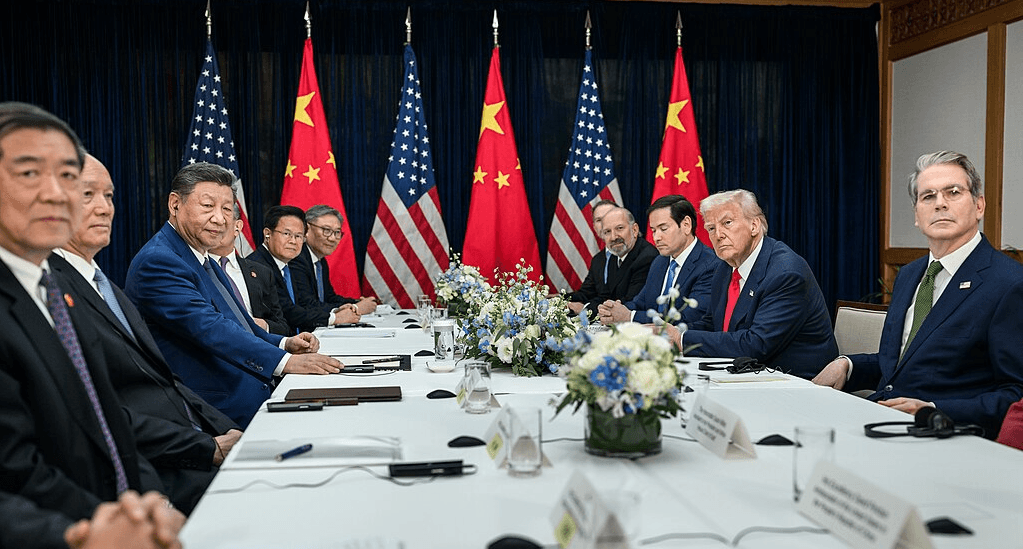
The House Select Committee on the Chinese Communist Party released a comprehensive report on November 12, 2025, detailing Beijing's systematic manipulation of global rare earth markets and proposing a multi-pronged strategy for the United States to achieve supply chain autonomy. Titled "Predatory Practices: How the CCP Manipulates the Global Critical Minerals Market," the bipartisan document—led by Chairman John Moolenaar (R-Mich.) and Ranking Member Raja Krishnamoorthi (D-Ill.)—accuses China of weaponizing its near-monopoly to extract concessions in trade negotiations, including during the recent U.S.-China truce.
China controls approximately 90% of global rare earth mining and over 99% of refining capacity, according to the International Energy Agency's 2025 assessment. These 17 elements—essential for electric vehicle batteries, wind turbines, semiconductors, and fighter jets—generate $10 billion annually for Beijing, enabling export controls that disrupted U.S. defense production in 2010 and 2019. The report traces China's dominance to a deliberate strategy launched in the 1980s: state subsidies totaling $100 billion since 2000, low-interest loans to miners, and environmental deregulation that undercut Western competitors. By 1990, China flooded markets with low-cost exports, driving U.S. production from 20,000 tons in 1980 to near-zero by 2002, when the Mountain Pass mine closed due to bankruptcy.
Public sentiment shifted in the U.S. during the 2010s amid supply chain vulnerabilities exposed by the iPhone boom and EV transition. Efforts to revive domestic output began with the 2017 Defense Production Act invocation under President Trump, funding $100 million for Mountain Pass reopening. The 2020 National Defense Authorization Act allocated $120 million for rare earth processing, but progress stalled under supply gluts from China's dumping—prices fell 40% in 2023 alone. Legislative pushes intensified post-2024: 17 states introduced bans or restrictions on Chinese minerals in 2025, with Utah and Florida enacting procurement reforms in July and September.
President Trump's October 2025 Asia tour accelerated momentum, yielding bilateral agreements to diversify sources. On October 27 in Tokyo, Trump and Japanese Prime Minister Sanae Takaichi signed the U.S.-Japan Framework for Securing Critical Minerals Supply Chains, committing $15 billion over five years for joint exploration, refining, and R&D in rare earths and lithium. In Kuala Lumpur on October 26, pacts with Malaysia, Thailand, and Cambodia promised U.S. technical aid for sustainable mining and export quotas bypassing Chinese dominance. These deals, valued at $20 billion collectively, aim to secure 20% of U.S. needs from allies by 2030, per White House estimates.
The committee's roadmap builds on these steps with targeted federal interventions. It calls for $5 billion in Export-Import Bank financing for domestic mining projects, 45Q tax credits extended to rare earth processing (potentially saving $1 billion annually), and permitting reforms to slash mine approval times from 10 years to two via streamlined NEPA reviews. To counter dumping, it proposes price floors—minimum import duties on Chinese rare earths at 25%—and a $2 billion stockpile managed by the Defense Logistics Agency. Bipartisan urgency underscores the threat: Moolenaar warned, "China has a loaded gun pointed at our economy," while Krishnamoorthi highlighted national security risks from 80% U.S. reliance on Beijing for defense components.
Challenges persist. Experts like Ryan Castilloux of Adamas Intelligence estimate 10-15 years to build sufficient capacity, given environmental hurdles and skilled labor shortages. China's October 9, 2025, export licensing regime—requiring approvals for rare earths—demonstrates ongoing leverage, though the U.S.-China trade truce suspended controls for one year. With five states' bills pending and the EPA's 2024 fluoride ruling signaling broader additive scrutiny, 2026 could see accelerated implementation, fortifying American resilience against economic coercion.
Like this article