A Nation United in Faith and Fury: Charlie Kirk's Memorial Marks a Turning Point for America
The sun had yet to crest the horizon when the faithful began their vigil. Lines snaked for miles around the 63,000-seat stadium, with devotees arriving in the dead of night, some camping out under the stars clad in red, white, and blue.
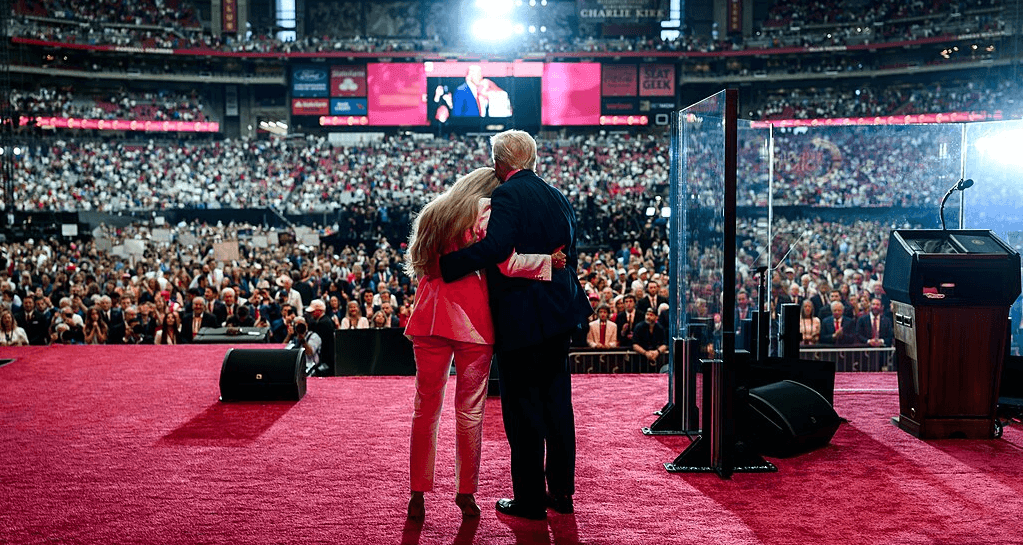
In a spectacle that blended solemn grief with unyielding resolve, an estimated 200,000 Americans gathered Sunday at State Farm Stadium in Glendale, Arizona, to honor Charlie Kirk, the 31-year-old conservative firebrand gunned down 11 days earlier. What began as a memorial for a fallen warrior of liberty transformed into a thunderous affirmation of faith, patriotism, and defiance—a historic convocation that drew millions more worldwide through live broadcasts on major news networks and online streams. Kirk's assassination at Utah Valley University on September 10, at the hands of 22-year-old Tyler Robinson—who now faces the death penalty—exposed the raw hatred festering on the left, where gleeful mockery and callous dismissals poured forth like venom. Yet in the face of such depravity, the right has coalesced with a ferocity unseen in generations, igniting a spiritual and political revival that signals nothing less than a turning point for the United States and beyond.
The sun had yet to crest the horizon when the faithful began their vigil. Lines snaked for miles around the 63,000-seat stadium, with devotees arriving in the dead of night, some camping out under the stars clad in red, white, and blue. By dawn, highways ground to a halt, and parking lots overflowed, forcing throngs to trek on foot from remote fields. Families with young children, grizzled veterans, and wide-eyed college students mingled in a sea of American flags and handmade tributes, their faces etched with sorrow but lit by purpose. Overflow venues broadcast the service to additional arenas, ensuring every soul who journeyed could bear witness.
High security blanketed the proceedings, evoking the vigilance of a Super Bowl rather than a funeral. Metal detectors, bag checks, and K-9 units funneled entrants through labyrinthine queues, while snipers perched on rooftops and drones hummed overhead. No outside banners or signs pierced the perimeter; instead, pre-printed placards awaited at seats—"Well Done, Good and Faithful Servant," "Never Surrender—Remember Charlie Kirk," "Here I Am, Lord, Send Me." A smattering of protesters—fewer than 100, by all accounts—huddled behind police barricades on the fringes, their chants drowned by the roar of unity inside. Officers in riot gear kept the peace, a stark reminder of the threats Kirk faced in life and the perils his movement now inherits.
From the moment the massive Jumbotron flickered to life, the tone was electric: a fusion of eulogy, rally, and revival. Worship erupted early, with Christian luminaries like Chris Tomlin, Phil Wickham, Cody Carnes, Kari Jobe, and Brandon Lake leading anthems that shook the rafters. "Death is not the end... it's only the beginning," Lake belted, as 200,000 voices rose in harmony. Attendees waved tribute signs in rhythm, transforming the arena into a living tapestry of redemption. Even before the national anthem—punctuated by red rocket bursts and "USA! USA!" chants—Kirk's pastor, Rob McCoy, issued an altar call, extending the gospel to the lost amid the pews. Videos of Kirk's fiery campus speeches interspersed the program, drawing laughter at his quips and tears at his zeal.
The high-profile roster of speakers read like a roll call of America's conservative vanguard, each weaving personal anecdotes with calls to arms. Vice President JD Vance thundered that Kirk led not just youth but the nation, vowing, "We will speak the truth every single day for Charlie... we will never shrink, we will never cower, even staring down the barrel of a gun." Donald Trump Jr. hailed Kirk as a brother, while White House advisor Stephen Miller pledged, "We will finish the job... for every patriot who stands with us." Dr. Ben Carson urged all to "stand up for what you believe in," crediting Kirk's counsel. Rep. Anna Paulina Luna, a former Turning Point USA operative, declared Kirk's name would echo alongside Washington, Kennedy, and King. Dr. Frank Turek, Kirk's confidant, reminded the throng: "Charlie is in Heaven because His Savior sacrificed Himself for Charlie Kirk." Podcaster Benny Johnson evoked divine orchestration, noting, "God saved our president from an assassin's bullet for this moment," alluding to President Trump's narrow escape in July 2024. Secretary of State Marco Rubio, HHS Secretary Robert F. Kennedy Jr., DNI Director Tulsi Gabbard, Secretary of War Pete Hegseth, White House Chief of Staff Susie Wiles, Hillsdale College President Dr. Larry Arnn, and Turning Point COO Justin Streiff rounded out the lineup, each testifying to Kirk's indelible mark—from mobilizing 2,200 campuses to flipping youth votes in 2024.
Yet the heart of the five-hour odyssey pulsed in the eulogy delivered by Erika Kirk, the slain leader's widow and now CEO of Turning Point USA. Poised yet crumbling under emotion's weight, the 36-year-old mother of two recounted the chaos of that fateful Utah evening, her voice cracking as she described cradling her husband's lifeless form. "Charlie wanted to show [college kids] a better path, a better life," she said, tears streaming. "He wanted to save young men—just like the one who took his life." In a moment of transcendent grace, Erika invoked Christ's words from the cross: "Father, forgive them, for they know not what they do." Turning to the assassin, she proclaimed, "That man... I forgive him. I forgive him because it was what Christ did, and what Charlie would do." The stadium erupted in a standing ovation, waves of applause crashing like a spiritual thunderclap. Erika contrasted the left's playbook of riots and rage with the response to her husband's death: no violence, no upheaval—"instead, we saw revival." Bibles cracked open after a decade's dust; prayers ascended from parched lips; churches swelled with the long-lost. "This is what my husband always prayed for," she whispered, collapsing into sobs as the crowd enveloped her in silent solidarity.
President Trump closed the proceedings with a masterstroke of tribute and resolve, branding Kirk "a martyr for American freedom" and "our greatest evangelist for liberty." Recounting Kirk's improbable rise—from a Chicago kid with $1,800 and a card table scrawled "Big Government Sucks" to a movement kingpin who energized millions—Trump credited him with historic youth turnout in 2024. "He was one of the few who always gave more than he took," the president said, voice steady amid the din. Vowing to posthumously bestow the Presidential Medal of Freedom at the White House, Trump thundered, "Charlie started with an idea to change minds on campuses and ended up changing history." He consoled Erika and her children: "An entire nation wraps its loving arms around you... We vow your children will grow up in a land where their father is revered as a great American hero." To Kirk's parents: "Your son brought more good in 31 years than most do in a lifetime." Trump decried the "radicalized, cold-blooded monster" who silenced Kirk for daring to speak truth, echoing a shared motto: "Never back down, never surrender." Global vigils from Canada to South Korea underscored the ripple: "Never underestimate one person with a good heart, a righteous cause... and the will to fight, fight, fight."
Kirk's murder—a bullet fired amid a campus dialogue he championed—laid bare the left's rot. Where decency might demand mourning, sneers and snark prevailed: online trolls jested at his expense, pundits twisted grief into gotchas, and outlets peddled smears as analysis. Disciplinary purges followed, with firings and bans for those who dared critique the icon. This bile, born of ideological venom, only fortified the right's phalanx. From basements to boardrooms, a clarion call resounds: Kirk's blood waters the seeds of resurgence. Evangelical fervor marries political muscle; forgiveness tempers fury. As Tucker Carlson intoned in a searing address, "Charlie rests in glory... We grieve the friend lost, but go forward strengthened by his faith." In this crucible, America glimpses its phoenix hour—a united front against darkness, propelled by the man who dared to save a nation one soul at a time.
Charlie Kirk's legacy? Immortal. His mission? Unfinished. And in the echo of 200,000 voices, the world hears the drumbeat of destiny.
Like this article